Our Why
Our Why

TRUSTED BY TOP EXPERTS
40+ Years of Experience. 40,000+ Professionals Trained.



















































































You're a Public Problem-Solver…
Your Work is too Important to Fail
The public gave you a mission and responsibilities to fulfill. That doesn't make your work easy. But your work is too important to fail because it's on behalf of the public.
Our combined research and professional experience have led to the development of our powerful approach for public-sector professionals to Systematically Develop the Informed Consent (SDIC)® of their various publics, particularly of a project’s fiercest opponents.
SDIC has enabled public-sector professionals with important missions to get their proposals implemented, rather than becoming victims of NIMBY, “politics,” and budget cuts.
Over the course of four decades, we have helped people with public-sector missions (hired professionals, as well as elected and appointed officials) be consistently effective at accomplishing their mission.
In total, we’ve trained over 40,000 professionals LIKE YOU — how to get the job done.
How? NOT by using gimmicks, tricks, or spin.
By working tirelessly to get the public to see what you see. To understand your thinking. You'll discover "unreasonable interests" aren't so unreasonable.
It's up to YOU to develop legitimacy in their eyes.
If you work openly and honestly, you'll discover your public just might conclude that your recommendations aren't the work of "bureaucrats feeding at the govt. trough." It's the work of people dedicating their lives to working on behalf of the public.
This is what Implementation Geniuses® do intuitively.
Our training teaches you how to change your thinking so you can be as effective and efficient as they are -- as long as your work is legitimate and technically competent.
OUR WORK BEGAN WHEN CITIES WERE BURNING
Our work began when cities were burning from racial tensions and anti-war riots during the 1960’s.
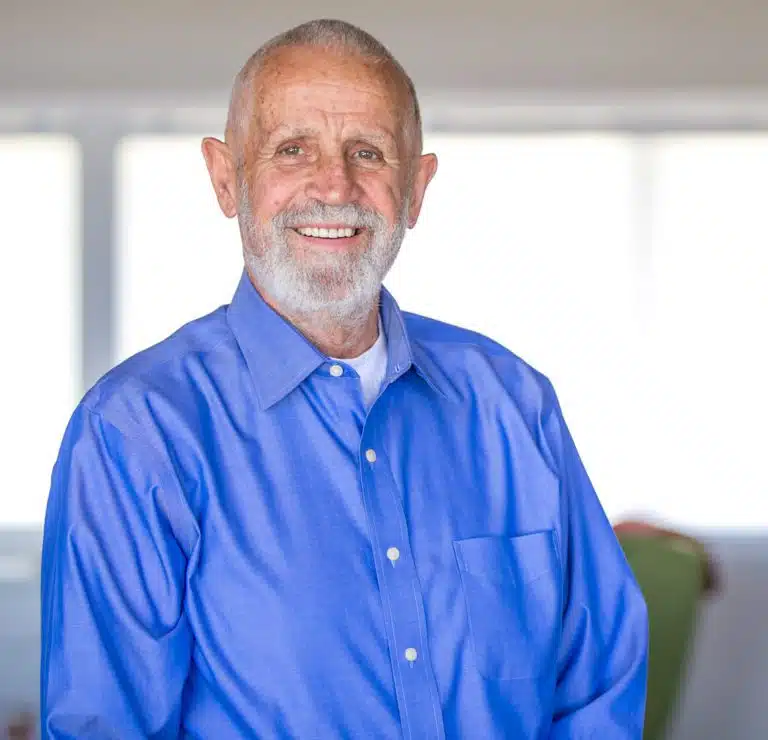
That’s when Hans pivoted from a career in architecture to community planning.
He had to “do something” to help people with real problems, not rich problems.

When Science Meets Politics: The Polarized Fight Over Montana Elk
When Science Meets Politics: The Polarized Fight Over Montana Elk How Distrust and Misinformation Forced Biologists to Seek a...

From Chaos to Consent: Saving Round Rock’s Government
From Chaos to Consent: Saving Round Rock's Government When a Population Boom Triggered a Referendum to Abolish Local Authority When an anti-growth...

From Predictions of “Carmageddon” to Winning Awards for Engagement
From Predictions of “Carmageddon” to Winning Awards for Engagement The Consent-Building® Strategy That Saved Missouri’s Most Disruptive Project
Using Non-Traditional Tools
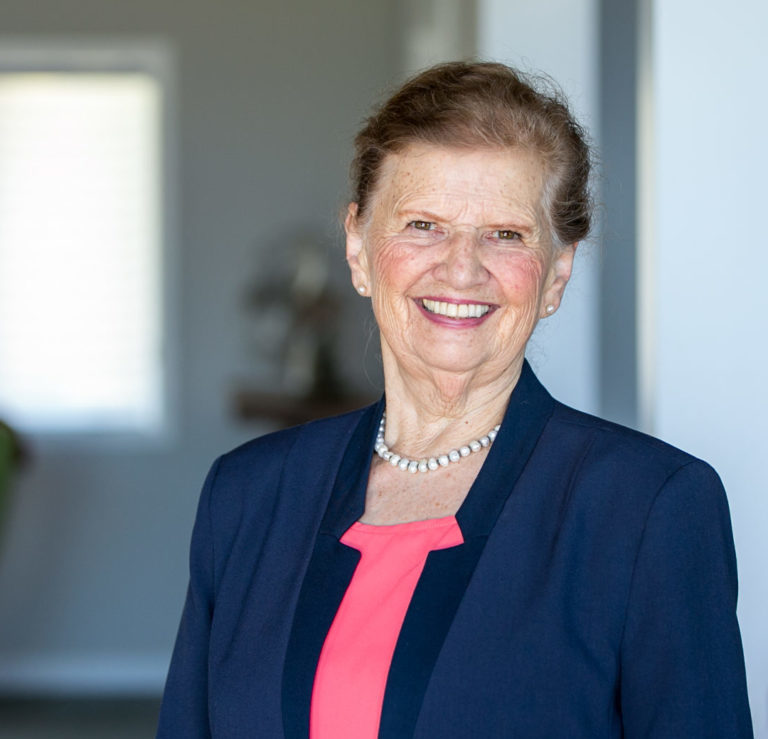
Hans and Annemarie’s personal partnership became professional when they combined his work in Planning with hers in Urban Anthropology.
Annemarie used her anthropological training to engage hard to reach interests — with astounding success.
She discovered how non-traditional methods of gathering input could be used in the public-sector.
They earned a reputation for being able to get critical input from belligerent interests while earning opponents’ trust and respect.
Over 40,000 Trained
Out of Hans and Annemarie’s effort to solve “real” problems, developed the training we’ve taught to over 40,000 subject-matter experts.
Using our approach, professionals from every imaginable disciple have credited us with their unparalleled success.
Because they learned how to consistently develop the trust and respect of their most cynical stakeholders.
The Secret to Our Success
What makes our training so unique?
American values are the backbone of our approach.
It’s these values we see today being put through the crucible as cities burn, divisions deepen, and people dismiss science.
Anti-Government Attitudes
Our approach is designed for turbulent and controversial times.
You don’t need our help when everyone agrees and trusts your team.
You need our help when:
- Anger, fear, misinformation, and threats of violence are running rampant…
- People wonder if you have a hidden motive…
- Policymakers run on a platform to disband agency…
- Individuals see your work as a threat to their rights, liberties, and freedoms.
It’s because of our work that we remain hopeful in times like these.
We’re not willing to give up.
We hope you won’t either.
Your Work Matters
We’re committed to helping you solve community problems.
And we’ll help get your public to realize you’re solving problems — not infringing on anyone’s rights.
The public’s perceptions matter.
Your work matters.
You matter.
What We Can Promise You
Our approach isn’t a panacea.
It’s not going to heal all our society’s wounds.
But — I can promise, if you use our approach — it WILL help.
For over four decades, our students have shared how our approach helped them solve serious public problems.
And renewed meaning in their lives.
No matter how contentious, complicated, or controversial your work is — this approach works.
Issues of Rights, Liberties and Freedoms
We’ll teach you how to:
- Reach those interests you’re certain you can’t.
- Develop constructive relationships with unreasonable, irrational, even abusive stakeholders.
- Get through to those who distort and dismiss your technical and scientific work.
You’ll understand what’s really being said beneath stakeholder emotions.
What You Won’t Learn
We won’t teach you any gimmicks or slick outreach tools.
You won’t learn how to get sneak approval on your project while the public remains apathetic and disinterested.
There’s no trickery in what we teach.
No snake-oil.
No spin.
Nothing unethical.
Use our approach, and you’ll become more honest and transparent than you’ve ever been.
You Deserve the Public’s Appreciation
Not only will you become more successful in your professional life…
The public will finally appreciate your work.
You’ll gain the trust and respect of the fiercest opponents, the Silent Majority, and policymakers.
The Public Needs You
Keep solving important problems.
That’s what our communities need.
Solving REAL problems is what you, I, we — do best.
-Jennifer Bleiker
Hans
R&D Developer
Alone at age 16, I left my native Switzerland.
Setting off to “do more” than what my social rank permitted, I headed for the “land of opportunity” — the United States.
Over the next several years, my journey led me to become a farmhand in Wisconsin, a cowboy in Wyoming & Montana, an aircraft mechanic for the U.S. Air Force, a graduate of the 6-year Bachelor’s program of Architecture from the University of Cincinnati, and to earn a Ph.D. in Urban Planning from the Massachusetts Institute of Technology (MIT).
America proved to be the “land of Opportunity” — as advertised!
Each chapter in my adventure was better than the last.
My architectural education was particularly fulfilling — until it dawned on me that most of my work would consist of designing beautiful structures for wealthy people. Which wasn’t the end of the world, but this was 1966 — a time when cities were burning with social, racial, and economic tension, as the Civil Rights protests heated up.
There were serious problems to solve. . . and I needed to be part of the solution.
So, I pursued a Ph.D. in Urban Planning from MIT, which drew from the design work I did in architecture school and gave me a way to address social, economic, environmental, and transportation issues.
While doing four case studies as part of my Ph.D. research, I made two major findings.
These findings changed my life (and can change yours)...
Finding #1: Even the leading experts are shockingly ineffective.
With all their data, scientific and expert analysis – rarely do policymakers and the public adopt expert advice. As a result, few public professionals fulfill their responsibilities (i.e, the mandate or mission the public gave them).
My research revealed that most public professionals are mired in frustration as the public doesn’t trust or adopt their recommendations, which too often land on a shelf.
To my surprise, I discovered it isn’t the technical work that’s most difficult… It’s the “impossible” task of getting “buy-in” from the public and policymakers that causes so many public professionals to feel frustration and despair.
At the 11th Hour in a planning process, opponents often come out of the woodwork – resulting in political gridlock and attacks on staff for “not involving” them.
Even the most charismatic, experienced, politically astute, and scientifically hard-nosed teams watched their best work get:
Stopped
Stalled
Shelved
Compromised
Torpedoed
And even disparaged…
To my horror, the derailment of critical public-sector plans and projects became not just commonplace but predictable.
I wasn’t eager to join the corps of frustrated professionals, all of whom were more politically savvy, skillful, and experienced than me. But just as I started to consider returning to Architecture, I stumbled upon another amazing phenomenon (Finding #2).
Finding #2: A tiny minority of experts are HIGHLY effective.
Unlike their peers, their proposals were:
NOT stopped
NOT derailed
NOT shelved
NOT compromised
NOT torpedoed
These professionals worked under the same constraints, the same contentious political environments, the same disgruntled stakeholders.
Yet, no outraged opponents showed up at the final public meeting… No one accused them of failing to “involve” them.
Unlike their frustrated counterparts, the recommendations of these experts were approved, funded, and implemented!
So what were they doing differently?
Not only that, but their analysis, authority, and technical recommendations were identical to those of their frustrated colleagues.
But the public, policymakers, and especially opponents to their proposals – reacted to them differently.
Their opponents TRUSTED and RESPECTED them.
Even though they offered the exact same technical advice as their colleagues who were under attack!
Not only were these subject-matter experts able to work constructively with opponents, but they were also able to fulfill their responsibilities and public duties.
I nicknamed these professionals “Implementation Geniuses”. [LINK]
Their professional success was NOT stalled by “political gridlock”.
They were NOT stopped at the 11th Hour.
Their credibility and legitimacy were NOT in question.
Their opponents actually TRUSTED them, while maintaining their opposition!
If anything, their public (including opponents) greased the wheels of progress so that their work would be done more efficiently and effectively.
Because they routinely accomplished the same work in less time and within a smaller budget – they were highly fulfilled in their professional lives.
If Annemarie hadn’t protested, I would have started my Ph.D. all over, just to figure out what these “Implementation Geniuses” were doing differently.
Instead, I finished my Ph.D., became the Planning Director for the City of Lynn, Massachusetts (population 100,000), later as the Project Manager for a research project at MIT’s Transportation Systems Division, and eventually the Director of Planning for a large Environmental Consulting firm, NHPQ, that worked throughout the Rocky Mountain region.
My last “real job” was as a tenured professor at the University of Wyoming, where I was recruited to create – and then administer – its Graduate Program in Community and Regional Planning. I served as Director of that program for twelve years.
Together with Annemarie and Jennifer, I’ve spent my life studying, simulating, and teaching the innate abilities of Implementation Geniuses.
So what IS the hidden ingredient in Implementation Geniuses’ effectiveness?
(Hint: it’s what you can learn in our Dealing with NIMBY course.)
About Annemarie
President & Instructor
Several years after Hans, I left Switzerland to join him in pursuing the American Dream.
Like Hans, I took my role as a US citizen to heart and wanted to contribute to understanding, reducing, and resolving conflict during the Civil Rights era of the 1960s and ‘70s.
That led to my formal education in Urban Anthropology, with a Bachelor’s degree from Boston University and a Master’s from Brandeis University.
Within Urban Anthropology, I studied a puzzling phenomenon: What affects people’s reactions to the same stimulus (especially those with negative impacts)?
An incredible case study on this question unfolded right in our own neighborhood as two “hippy groups” established communes across the street from one another. The commune lifestyle clashed — in fact, it offended — the residents and homeowners within our neighborhood between MIT and Harvard.
What fascinated me was that neighbors tolerated – even embraced – one of the groups, but NOT the other.
Even though the “negative impacts” of these two communes were the same on the neighbors, those who found their lifestyle offensive reacted to each group differently.
I became fascinated with exploring what imperceptible differences the less-than-welcoming residents saw or experienced between the two, as there were no obvious differences based on usual demographics, lifestyle, or their impacts on surrounding neighbors.
The result of my research led me to conclude that even in the face of obvious conflict, common ground CAN be found.
- Even when everyone was convinced none existed!
Not only was this a major outcome of my thesis, but it aligned beautifully with Hans’ discovery that it IS possible to earn opponents’ Informed Consent as a form of agreement – even when they’re still opposed.
Like the case of the communes in Cambridge, we discovered the professionals who work at developing opponents’ Informed Consent – experience a constructive and collaborative form of conflict – rather than a destructive and intractable form of conflict.
Ever since graduate school, we’ve worked to understand, develop and systematize the techniques and tactics Implementation Geniuses intuitively use.
Over the last several decades, we’ve traveled over 3 million miles, training tens of thousands of professionals with our Consent-Building approach – leading many students who weren’t naturally inclined to become Implementation Geniuses themselves!
About Jennifer
jennifer@consentbuilding.com
Planner, R&D Developer, Principal
Much like my parents (Hans & Annemarie), this work derailed my original career path.
Growing up with Consent-Building jargon, I always found my parents’ work interesting, but wholly different from my desire to become a doctor of medicine. (Nonetheless, it was great fun to practice their Consent-Building tactics on them as a teenager — especially when I succeeded!)
Throughout college and after, I worked in a variety of medical clinics. The last as a Case Manager and Research Author for a pediatric malnutrition clinic in Boston’s inner city. In each, I saw how breakdowns in communication and trust led to serious consequences for children, their families, and public health in general.
Seeing the consequences distrust had on pediatric patients, children I came to know and help care for – shook me to the core… as well as every doctor I worked with.
Doctors fresh out of medical school and just a few years ahead of my intended path pulled me aside and warned me how unfulfilling, frustrating, and ineffective all their technical training was in changing the outcome in patients’ lives.
These were some of the brightest doctors and researchers in the world, and yet they felt total despair. Trapped by their med school debt, they couldn’t reinvent their career trajectory and instead were bound for a future in futility, only addressing the more trivial health issues they encountered.
They cautioned me to reconsider going into medicine with the high hopes of improving people’s health and lives: “You still have a chance… It’s not too late for you…”
I didn’t doubt what these doctors told me, I just didn’t know what else I would do with my life. So I continued on my path of studying for the medical entrance exams. During that time, I took a job as a Firefighter/EMT in a suburb of Boston. The Fire Dept schedule had a tempo that allowed me to work for my parents whenever they held training east of the Rockies.
It wasn’t long before their students urged me “not to let their [Consent-Building] work die with them”, but to follow in their footsteps.
Taking in these two points of view, I had an epiphany… While it wasn’t the kind of “healing” work I’d envisioned doing, I realized my parents were having tremendous healing effects on communities, stakeholders, and the professionals who serve them.
A lot has happened since those early days of traveling with my folks: I reluctantly left the Fire Service (when I married someone in the US Army), started a family, moved multiple times, completed a Master’s in Public Policy (with a thesis on how not to use Social Media when engaging with interests)– all the while learning and eventually teaching the intricacies of Consent-Building, along with their other courses.
To my amazement, in each of the subcultures I joined, I noticed how natural it is for people to mistrust technical experts or those in the role of an authority…
Over the last three decades, I’ve continued to expand and develop the ways we help professionals learn to see their “obstacles” in a new light, using simulations, exercises, discussions, and methods of discovery.
My current research delves into how public-sector work converges with: Client-Centered and Experiential Psychology, Philosophy, Conflict Mediation, Emotional Intelligence, and Loss & Grief.
I’m constantly developing new material that I hope will create deep insights for our students and deepen their ability to apply Consent-Building, Leadership, and Professional Ethics to both their professional and personal lives.
As the Principal of the family firm, I’m honored to continue teaching and coaching their methodology and material to public professionals across every imaginable discipline.
While Hans and Annemarie have (mostly) retired, they’re moved by the frequent messages we receive from longtime students, attributing their career success to Consent-Building.
We have such gratitude for these messages because they remind us that ensuring your expertise isn’t wasted (when it could be solving community problems), our lives also aren’t wasted.
Thank you – to all those who go out of their way to share their successes with us.